Aluminium AlSi10Mg
SLMThe most widely used metal printing alloy: light, thermally conductive, highly stable to print and the best value.
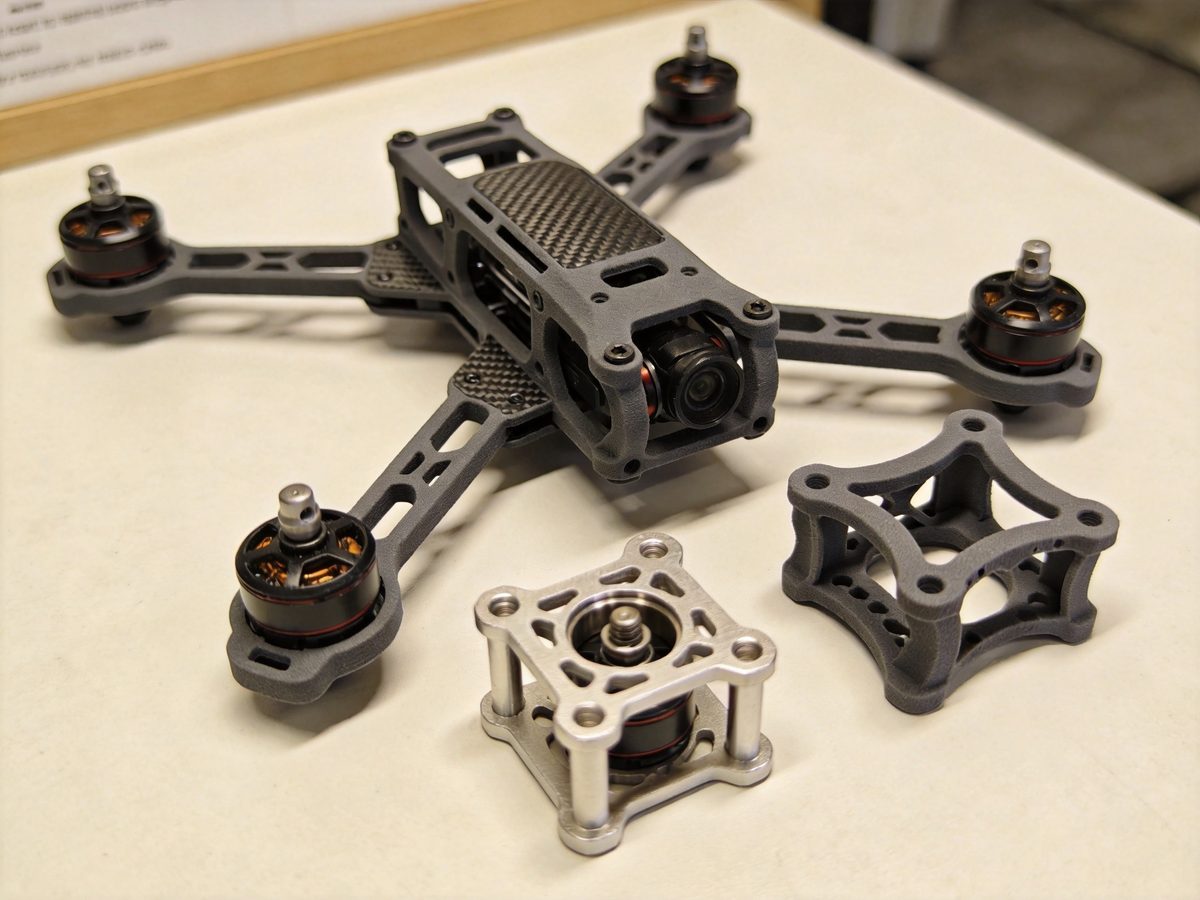
Typical applications: Heat sinks, lightweight brackets, UAV structural parts
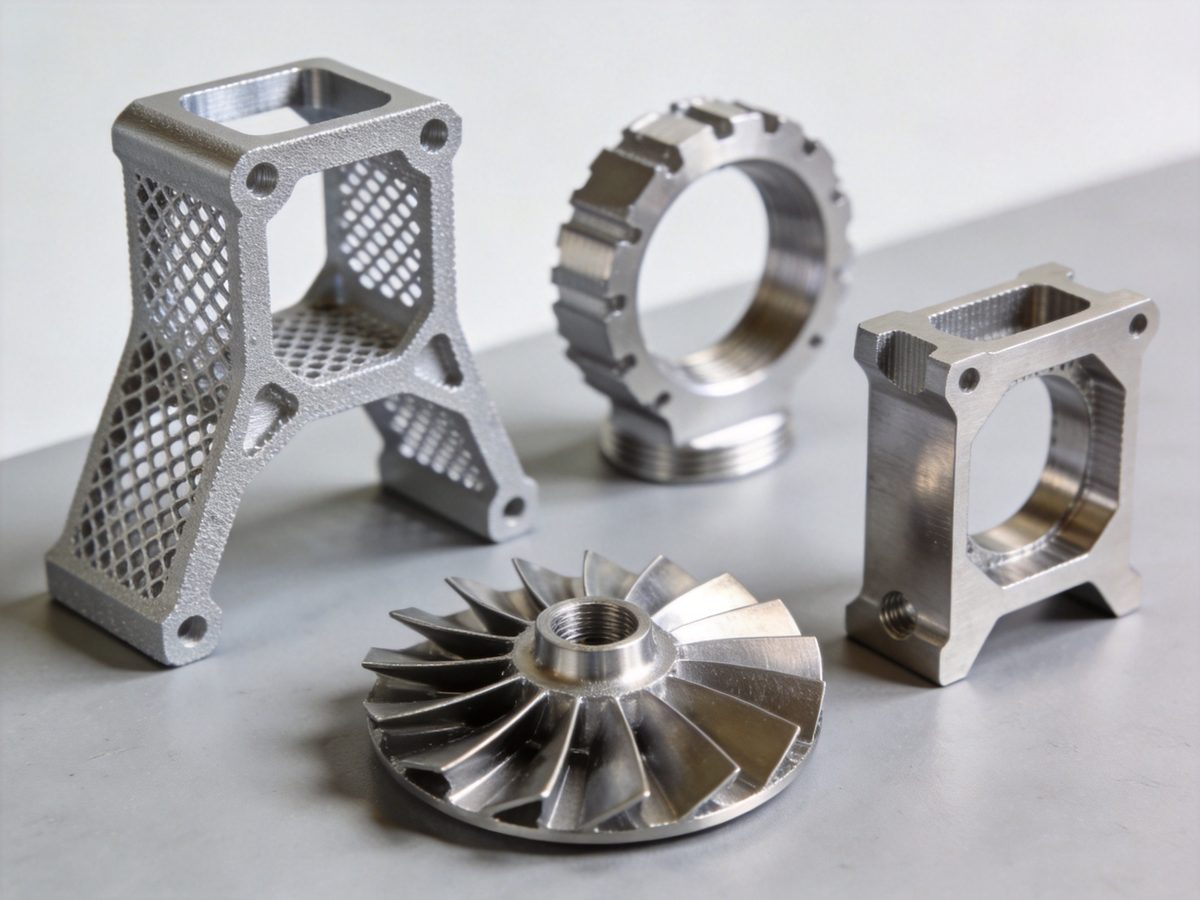
Eight metal alloys produced by laser powder bed fusion (SLM) at above 99.5% density, ready to use as end parts. Complex internal channels, lattice structures and conformal cooling that conventional machining cannot produce.
Metal printing is not a universal answer. A simple block is faster and cheaper on a CNC. The premium you pay for printing buys shapes that other processes simply cannot make.
Its real value sits in three places: internal channels (conformal cooling moulds, heat sinks), lattice lightweighting (30–50% weight reduction at equal strength), and tooling-free small batches (cheaper than tooling below roughly 50 pieces). If your part is not in one of these three categories, we will recommend CNC instead of pushing printing.
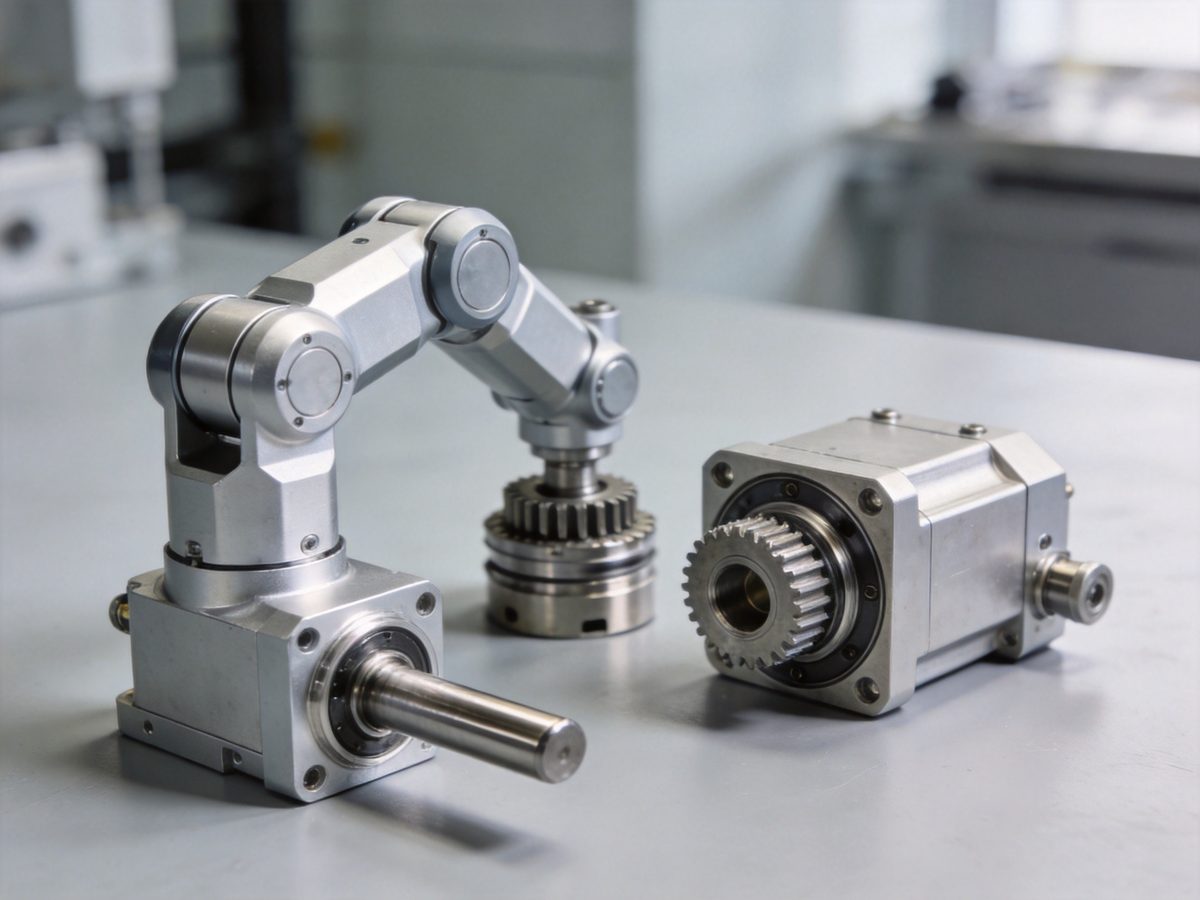
Each category lists mechanical properties and typical applications. Photos show real printed samples and will be replaced with production shots over time.
The most widely used metal printing alloy: light, thermally conductive, highly stable to print and the best value.
Typical applications: Heat sinks, lightweight brackets, UAV structural parts
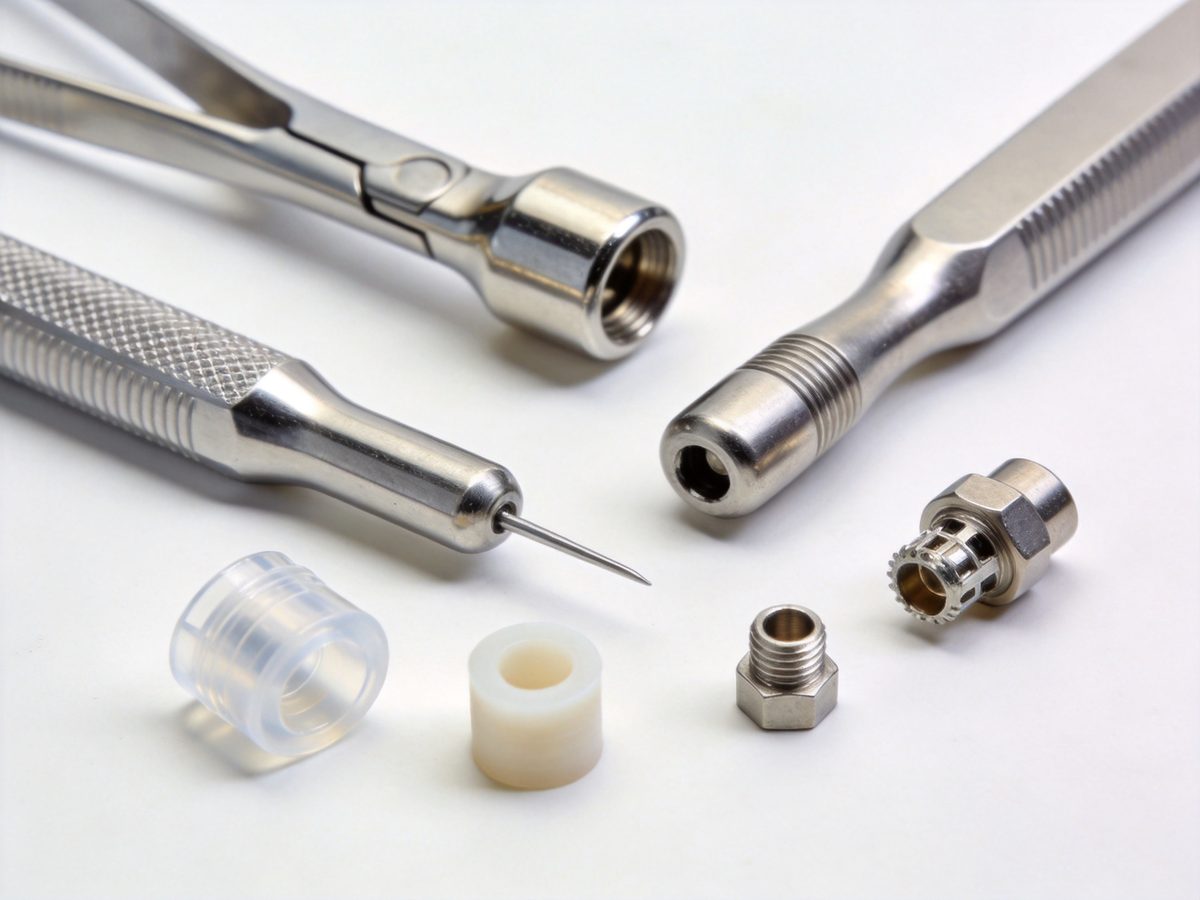
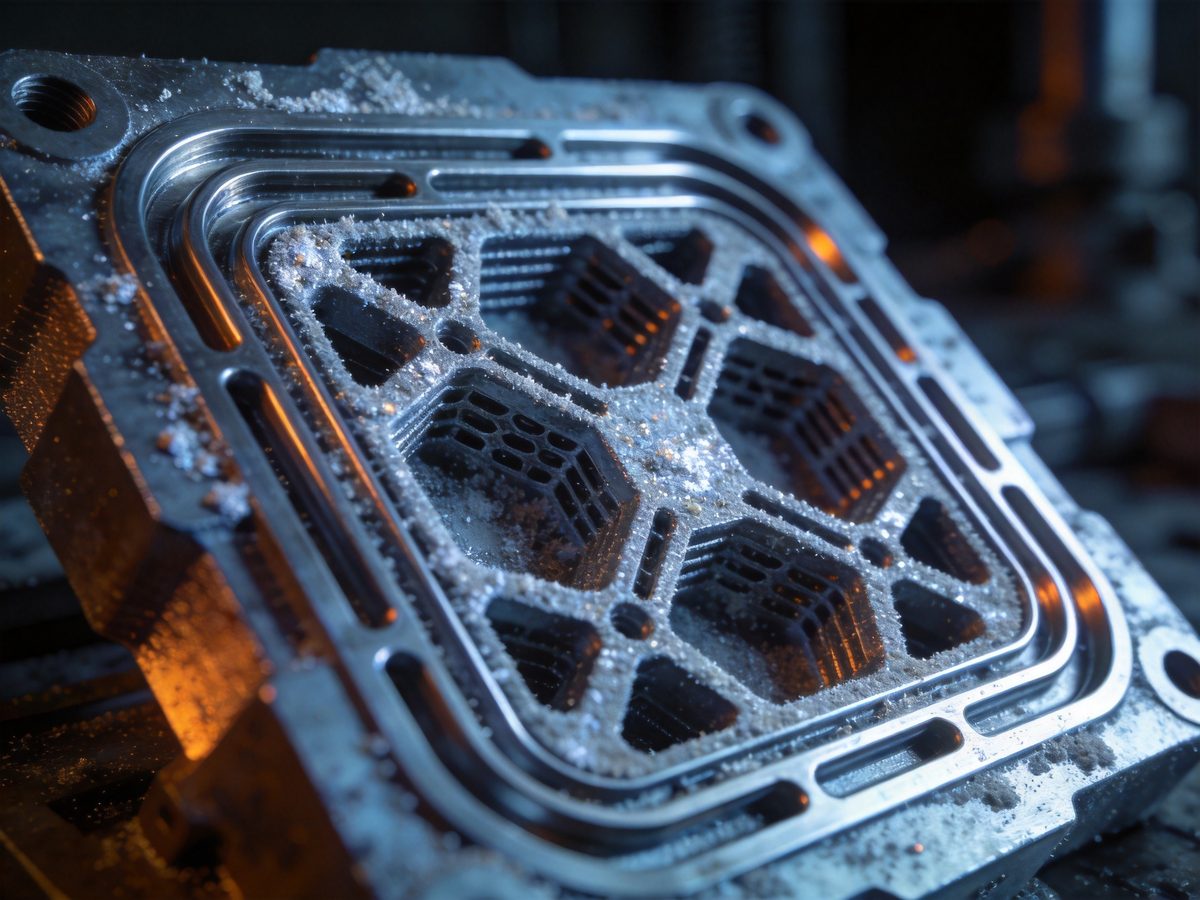
The most corrosion-resistant standard alloy, biocompatibility certified, common in medical and food equipment.
Typical applications: Fluid components, medical instruments, chemical equipment
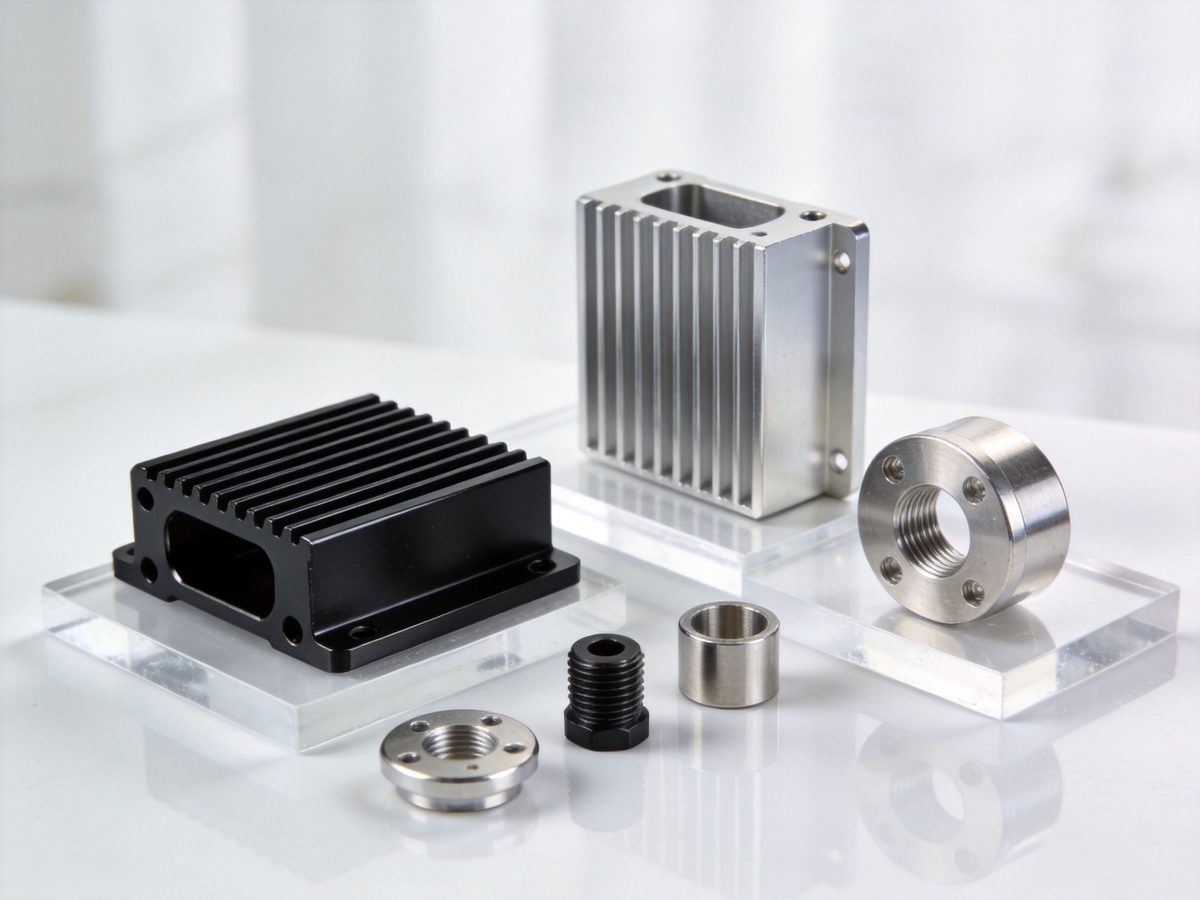
Precipitation-hardening stainless steel, reaching 1100 MPa tensile after heat treatment — the strongest of the stainless family.
Typical applications: High-strength structural parts, mould inserts, transmission parts
The aerospace and medical standard. At equal strength it weighs 57% of steel, with excellent corrosion resistance and biocompatibility.
Typical applications: Aerospace structures, medical implants, high-end sports equipment
The workhorse for conformal cooling moulds. Cooling channels can follow the cavity contour, cutting injection cycle time by 30–50%.
Typical applications: Injection moulds, die casting moulds, conformal cooling inserts
Nickel-based superalloy that retains strength at 700°C with oxidation and corrosion resistance — a core aero-engine material.
Typical applications: Aero-engine parts, gas turbines, high-temperature tooling
Outstanding wear resistance and biocompatibility — the standard material for dental and orthopaedic implants.
Typical applications: Dental frameworks, orthopaedic implants, wear parts
Thermal conductivity up to 320 W/mK, the first choice for thermal parts whose complex internal channels are hard to machine conventionally.
Typical applications: High-efficiency heat sinks, induction coils, electrodes, heat exchangers
Not every metal part should be printed. This table helps you decide when to call us and when to go straight to CNC.
| Criterion | Metal 3D printing | CNC machining | Recommendation |
|---|---|---|---|
| Complex internal channels | Built in one piece | Difficult, needs split and weld | |
| Lattice / topology lightweighting | 30–50% weight reduction | Not feasible | |
| One-off to small batch (1–50) | No tooling, stable unit price | Expensive per piece, programming | |
| Large volume (500+) | Limited price reduction | Unit price falls with volume | CNC |
| Simple blocks and turned parts | Possible but wasteful | Fast and cheap | CNC |
| High-precision mating faces (±0.01) | Requires secondary machining | Achieved in one setup | Print + CNC finishing |
Common practice: print the geometry, then CNC-finish the critical mating surfaces to combine design freedom with dimensional accuracy.
Send the STEP model and load requirements. Our engineers will assess structural feasibility and cost advantage before you commit.